Showing posts with label Piracy. Show all posts

The Golden Age of Piracy: Blackbeard

Blackbeard battles Lt. Maynard at the height of the Golden Age of Piracy

As the end of the Seventeenth Century approached, peace came to most of Europe. Privateers found themselves without jobs, as did many naval seamen. This “golden age” saw the greatest upswing in piracy ever. Unlike their predecessors, the buccaneers, these pirates preyed on merchant ships rather than Spanish galleons laden with gold and silver. Most prowled the Caribbean and Atlantic coast of North America, but some plied their trade off the West Coast of Africa and in the Indian Ocean.

The Buccaneering period, c. 1650–1680


Historians, such as John Fiske, mark the beginning of the Golden Age of Piracy at around 1650, when the end of the Wars of Religion allowed European countries to resume the development of their colonial empires. This involved considerable seaborne trade, and a general economic improvement: there was money to be made—or stolen—and much of it traveled by ship.


French buccaneers had established themselves on northern Hispaniola as early as 1625, but lived at first mostly as hunters rather than robbers; their transition to full-time piracy was gradual and motivated in part by Spanish efforts to wipe out both the buccaneers and the prey animals on which they depended. The buccaneers' migration from Hispaniola's mainland to the more defensible offshore island of Tortuga limited their resources and accelerated their piratical raids. According to Alexandre Exquemelin, a buccaneer and historian who remains a major source on this period, the Tortuga buccaneer Pierre Le Grand pioneered the settlers' attacks on galleons making the return voyage to Spain.

The growth of buccaneering on Tortuga was augmented by the English capture of Jamaica from Spain in 1655. The early English governors of Jamaica freely granted letters of marque to Tortuga buccaneers and to their own countrymen, while the growth of Port Royal provided these raiders with a far more profitable and enjoyable place to sell their booty. In the 1660s, the new French governor of Tortuga, Bertrand d'Ogeron, similarly provided privateering commissions both to his own colonists and to English cutthroats from Port Royal. These conditions brought Caribbean buccaneering to its zenith.

Although pirates flew flags before this time, the Jolly Roger we know belonged to the pirates of this age. They favored sloops and ketches to hunt their prey. While New Providence in the Bahamas provided them a safe haven for a time, Woodes Rogers changed that after his appointment as governor. He offered pardons to the pirates, then employed any who accepted to hunt other pirates. Those captured hanged.

The pirates of the Golden Age had common traits. Their victims usually surrendered. The pirates boldly declared their identity rather than engaged in tactics such as the ruse de guerre. They attacked ships away from land and took their time gathering their spoils. The majority of plunder taken wasn’t gold and silver, but supplies to maintain their ships and whatever everyday items (such as food and drink) they needed. The most successful ventures occurred when two or more pirate ships confronted their prey.

Blackbeard perhaps the most famous pirate was a master at intimidation. Blackbeard carried three braces of
Blackbeard (c. 1736 engraving)
pistols, placed smoking hempen cord in his beard, drank rum mixed with gunpowder, and looked at people with wild, staring eyes. Mentioning his name was enough to frighten any eighteenth-century mariner.

Like many Golden Age pirates, Blackbeard was a privateer before he turned pirate. When peace finally came to Europe, he embraced piracy and became a charismatic legend in his own time.  Initially, he signed with Benjamin Hornigold, a pirate who nurtured Blackbeard and taught him a fierce reputation would stand him in better stead than engaging in torture to achieve his ends. They based their operations in Nassau and plied the coastal waters of the American colonies. On their way home, they captured a French vessel named Concorde. It was to be the last prey Hornigold took, for he decided to seek the king’s pardon. Eventually, this pardoned pirate became a pirate hunter.

Blackbeard converted the Concorde into a pirate ship manned by three hundred men and carrying forty guns. He changed her name to the Queen Anne’s Revenge (QAR) and chose her for his flagship. Following Hornigold’s advice, he cultivated a bloodthirsty and wicked reputation. His successful attacks against ships of the British Royal Navy further enhanced that image. He did not engage in wanton murder and mayhem unless his victims resisted.

Queen Anne's Revenge

During the first three months of 1718, Blackbeard disappeared. No records exist to tell where he went or what he did. When he resurfaced, he led his fleet of eight vessels to Charleston harbor, blockaded the port, and held some of the town’s leading citizens for ransom. Rather than demand jewels and money, he requested a chest of medicine worth £300. When four days passed and the governor of South Carolina still had not met his demands, Blackbeard aimed all his guns on the town and would have fired had the pirates who delivered the ransom note not returned with the medicine.

Eventually, Blackbeard sailed to Ocracoke Island on the Outer Banks of North Carolina with the intent of seeking the king’s pardon. He knew, though, that too many pirates accompanied him, so he hatched a plan to rid himself of some. He purposely grounded the QAR and another ship, then sent some men ashore with orders to seek out a pardon for everyone. After they left, he and the remaining pirates sailed to Bath Towne, obtained pardons from the governor, and retired from piracy.

Blackbeard married a young woman, moved into a house, and became a local celebrity. He engaged in a smuggling operation, which he based on Ocracoke Island. Restlessness soon afflicted him, and once more he returned to piracy. On his return to Ocracoke, a fellow pirate visited him and they partied ashore. Before long, other pirates joined the festivities and fearful colonists demanded someone stop Blackbeard and his friends before they established a pirate fortress.

A map of the area around Ocracoke Inlet, 1775

On November 21, 1718, Lieutenant Maynard and fifty-eight men battled Blackbeard and twenty other pirates on the deck of Maynard’s sloop. He shot Blackbeard, but Blackbeard broke Maynard’s sword. A Highlander saved Maynard’s life by slaying Blackbeard before he delivered the fatal blow. On his return to Williamsburg, Maynard hung Blackbeard’s decapitated head from the bowsprit of his ship. He dumped the body overboard.

Blackbeard's Skull from the Edward Rowe Snow collection of the Peabody Today it is difficult to separate myth from reality where Blackbeard is concerned.  Some stories say he had fourteen wives, some of whom he shared with others.  He’s known by several names - including Drummond, Thatch, and Tash - but Edward Teach is considered his official name.  Few details of his early life are known, but he may have been born in Bristol, England. For thirteen months he terrorized people along the coast of North America and in the Caribbean. In the late 1990s archaeologists discovered an underwater wreck they believe is the QAR.  Their excavations are on going.


Source: Cindy Vallar.com 
Source: Wikipedia

Pirates: Mediterranean


It may be reasonable to assume that piracy has existed for as long as the oceans were plied for commerce

The earliest documented instances of piracy are the exploits of the Sea Peoples who threatened the Aegean and Mediterranean in the 14th century BC. In classical antiquity, the Illyrians and Tyrrhenians were known as pirates, as well as Greeks and Romans. During their voyages the Phoenicians seem to have sometimes resorted to piracy, and specialized in kidnapping boys and girls to be sold as slaves.


In the 3rd century BC, pirate attacks on Olympos (city in Anatolia) brought impoverishment. Among some of the most famous ancient pirateering peoples were the Illyrians, populating the western Balkan peninsula. Constantly raiding the Adriatic Sea, the Illyrians caused many conflicts with the Roman Republic. It was not until 168 BC when the Romans finally conquered Illyria and made it a province that their threat was ended.


Romanized Liburna during Trajan's Dacian Wars.

During the 1st century BC, there were pirate states along the Anatolian coast, threatening the commerce of the Roman Empire in the eastern Mediterranean. On one voyage across the Aegean Sea in 75 BC,[9] Julius Caesar was kidnapped and briefly held by Cilician pirates and held prisoner in the Dodecanese islet of Pharmacusa. The Senate finally invested with powers to deal with piracy in 67 BC (the Lex Gabinia), and Pompey after three months of naval warfare managed to suppress the threat.

As early as 258 AD, the Gothic-Herulic fleet ravaged towns on the coasts of the Black Sea and Sea of Marmara. The Aegean coast suffered similar attacks a few years later. In 264, the Goths reached Galatia and Cappadocia, and Gothic pirates landed on Cyprus and Crete. In the process, the Goths seized enormous booty and took thousands into captivity. In 286 AD, Carausius, a Roman military commander of Gaulish origins, was appointed to command the Classis Britannica, and given the responsibility of eliminating Frankish and Saxon pirates who had been raiding the coasts of Armorica and Belgic Gaul. In the Roman province of Britannia, Saint Patrick was captured and enslaved by Irish pirates.

Piracy On High Seas At Lowest Level In 6 Years, Report Says


Troops from the EU Naval Force warship FS Aconit intercepting a group of suspected pirates off Somalia in March 2012. Multinational naval patrols in the area have been partly credited with reducing incidents of piracy.


In November, the United Nations and World Bank issued a report saying that pirates operating off the Horn of Africa had The most famous incident there, the seizure of the MV Maersk Alabama, occurred in 2009. The capture of the container ship inspired the film , starring Tom Hanks.

Piracy at sea has hit a six-year low, thanks largely to a steep drop in attacks by Somali pirates operating in the Indian Ocean, according to a

The maritime watchdog says there were 264 strikes against shipping worldwide last year — a drop of 40 percent since attacks peaked in 2011. And there were just 15 attacks off the coast of Somalia; by comparison, that same area saw 75 attacks in 2012 and 237 the year before.

"The single biggest reason for the drop in worldwide piracy is the decrease in Somali piracy off the coast of East Africa," Pottengal Mukundan, IMB's director, said in a statement.

The report credits "a combination of factors, including the key role of international navies, the hardening of vessels, the use of private armed security teams, and the stabilizing influence of Somalia's central government" for the decrease.


Read more

Oil Soaked Pirates in Gulf of Guinea


In the early hours of 18 January 2014 a 75,000-ton tanker, the MT Kerala, vanished off the coast of Angola. A sophisticated pirate gang hijacked the Greek-owned vessel, disabling its identifications system and communication equipment, and painting over its identifying markers.

More than a week later and 1,300 miles away, the hijackers released Kerala off the coast of Nigeria, after offloading 12,270 tons of its diesel cargo to other ships.

The Kerala hijacking marks the southernmost expansion of Nigeria’s pirate gangs, but represents only one subset of piracy in the Gulf of Guinea. The waters of Gabon and Equatorial Guinea each suffered pirate attacks in the first week of 2014.

Off Nigeria—the epicenter of western Africa piracy—there have been at least 12 attacks against various types of vessels this year, resulting in multiple kidnappings. Within the swampy maze of the Niger Delta, militants-cum-pirates have robbed passenger vessels, kidnapped oil workers and ambushed security-force patrols.

This level of organized piracy—as distinguished from opportunistic robberies against berthed and anchored vessels—can be sorted into two different categories: tanker hijackings for product theft and maritime kidnapping for ransom.

Both forms are intertwined with the regional oil industry, but their distinct perpetrators, targets, and trend lines warrant separate looks. First, tanker hijackings.

 In Search of Black Gold

Tanker hijackings aimed at large-scale cargo theft first appeared off Benin in December 2010 and spread to the waters of Nigeria, Togo, Côte d’Ivoire, Gabon, and Angola in subsequent years. This western Nigeria-based criminal enterprise is highly organized and intelligence driven, allegedly with the involvement of high-powered political, business, and military patrons. As an suspected hijacker captured near Lagos explained:

“We do not work in isolation. We have a network of ministries’ workers. What they do is to give us information on the location and content of the vessels to be hijacked. Once we complete the assignment, we would inform the pointsmen who thereafter, contact the cabal that takes charge of the hijacked vessels. We usually meet at a designated point on the high sea, from where they would offload the contents from the hijacked vessels and thereafter, deposit them in various oil facilities for distribution by oil marketers.”

The pirates who hijacked Kerala targeted the ship based on foreknowledge of its cargo, location and intended movements. Using a stolen tugboat as a “mother ship,” the hijackers made a multiday voyage all the way to a Luanda anchorage and then selected their target from some 30 other vessels in the area.

After hijacking the ship, the pirates sailed towards the Republic of Congo where they made their first sale of stolen diesel. The hijackers later made two more ship-to-ship transfers off the southwest coast of Nigeria before abandoning Kerala on 26 January.

If the pirates sold the diesel for half of its $10 million market price, they and their sponsors netted some $5 million in an operation that lasted just over a week.

The geographic scope of this particular crime demonstrates the expansive multinational network of informants and buyers hijack syndicates employ. While the leadership of the gangs is Nigerian, they are thought to recruit regionally, as indicated by the testimony of captured pirates and reports of pirates speaking both English and French during attacks.

A Product of the Environment

Nigeria produces some 2 million barrels of oil per day, but has the capacity to refine less than a fifth of that. Crude oil is exported to foreign refineries and then brought back into Nigeria and sold at government subsidized rates—a process that provides ample opportunity for corruption, theft, and piracy of all sorts.

The pirates’ hunting ground—the dense backlog of tankers waiting at anchorage across the region—is a product of this peculiar market. So too is the pervasive acceptance of black market petroleum—be it from illegal refineries in the Niger Delta, or illicit ship-to-ship transfers—that enables stolen cargos to be so quickly flipped.

The fact that MT Itri, a tanker hijacked by pirates off Abidjan, Côte d’Ivoire, in January 2013, was detained a year later for allegedly receiving stolen fuel from Kerala reveals how deeply intertwined piracy is with the West African petroleum black market.

Feeling the Effects

Financial losses from tanker hijackings have been borne by regional states and the maritime and petroleum industries. Port authorities in Benin reported a 70 percent drop in maritime traffic after pirates snatched a dozen tankers from the country’s waters in 2010 and 2011. Underwriters from the Joint War Committee now include the littorals of Nigeria, Benin and Togo as high-risk areas where additional insurance premiums apply. Fears that Luanda might suffer a similar fate may have motivated the Angolan Navy to make an unsubstantiated claim Kerala’s crew had faked their pirate attack.

The Norwegian Maritime Authority has advised its members to implement the same anti-piracy security measures—such as vessel hardening, extra watch posts, and crew drilling—in Angolan waters that are mandatory off Nigeria, Benin, and Togo. Intertanko, the tanker industry’s leading trade association, has meanwhile revised its piracy clause to allow ship owners to wait further offshore from customary anchorages deemed unsafe, with the additional cost passed on to the charter company.

A Downward Trend

Heightened naval patrols and vessel security measures appear to be showing some success, as both the number of tanker attacks and successful hijackings have declined from a 2011 high. Prior to the taking of Kerala, there had not been a successful tanker hijacking reported in the Gulf of Guinea for over five months.

 Cargo theft syndicates are narrowly selective, targeting tankers fully laden with refined product at a handful of dense anchorages. As a response, regional states have concentrated limited naval resources to implement safe zones around pirate-prone anchorages off Cotonou, Benin, Lomé, Togo, and most recently, Lagos, Nigeria.

While maritime security has traditional been a low priority for West African armed forces, the spread of Nigerian piracy and its associated economic losses have prompted a flurry of regional naval acquisitions and international training and assistance programs. There was an increase in naval interventions in pirate attacks in 2013, with Nigerian, Togolese and visiting French naval forces all intercepting would-be tanker hijackings.

Vessel security and situational awareness has also improved as revised best management practices—such as the employment of local armed security, extra watch duty and the use of “citadel” safe rooms—become more widely applied.

Furthermore, there is evidence to suggest that the lucrative gains from tanker hijackings have inspired less organized and effective hijackers. There were at least two occasions in 2013 where pirates boarded tankers only to find that they were at ballast, indicating a lack of cargo intelligence. On Jan. 1, 2014, pirates boarded a gas carrier 55 nautical miles off Gabon, but, in an uncharacteristic move, retreated as soon as the crew raised an alarm. Opportunistic pirates, rather than organized criminal syndicates, are now responsible for 20 percent of tanker attacks, according to Nigerian sources reporting to regional security expert Dirk Steffen.

The Strategic Horizon

Naval patrols and vessel vigilance has partially succeeded in pushing tanker hijackers away from their old hunting grounds in the waters west of Lagos. The syndicates, it would appear, are conducting fewer, but more specifically focused, attacks against high-value targets off anchorages where piracy is not anticipated.

Given the infancy of the oil industry in the western Gulf of Guinea, the pirate gangs are likely to continue their trajectory towards the anchorages of established oil producing and refining states further south, threatening tankers off Gabon, Republic of Congo, and Angola. Opportunistic hijackers, meanwhile, will remain a risk for vessels operating close to shore off Togo, Benin, and western Nigeria.

West and Central African states are making incremental steps towards regional maritime security coordination, but information-sharing, maritime domain awareness, and long-range interdiction capacity remain problematic.

While partners such as the United States and European Union have increased training and assistance support, there is no current indication that international naval operations will be mounted in the Gulf of Guinea similar to the Gulf of Aden. Foreign armed guards aren’t an importable panacea, as only local security forces are permitted in the territorial waters of West African states.

The Gulf of Guinea is not the Horn of Africa and tanker hijackings are not occurring in a vacuum. Rather these pirates are an offshore manifestation of oil sector criminality and cogs in a regional illicit fuel market.

A long-term solution to West African piracy requires oil sector transparency and anti-corruption reform, increased refinery capacity in Nigeria and a cooperative maritime security regime that spans the region.

With no end in sight, the targets of these attacks must adapt to an ever-evolving threat. As Kerala discovered, these pirates will strike when least expected and where help is a world away.


Read More


MV Iceberg 1 – Interview with Hostages In 2011


The following is a report by Somalia Report - by Andrew Mwangura,


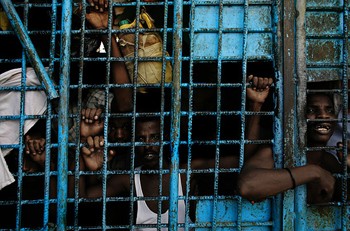
pirate prison somalia somaliThe Panamanian flagged Ro-Ro ship MV ICE BERG I was attacked and hijacked by armed pirates on 29th March last year while underway in position latitude 13:15 north and longitude 046:40 east in the Gulf of Aden at approximately 0930hrs. 

On March 29th, 2010 the MV ICEBERG 1 was only ten miles out from the port of Aden heading to the United Kingdom when she was attacked and seized by Somali pirates. Her cargo consists of generators, transformers and empty fuel tanks for a British power rental company, Aggreko International Power Projects.The ICEBERG 1, a RoRo ship with a multinational crew, is typical of much of the traffic in the region, but they became an example of the inhumanity dealt to innocent seafarers on behalf of piracy.

On December 17th the Captain of the vessel, Abdirazzak Ali Saleh, told Agence France-Presse, “The water we have is unclean and we have only one meal a day, boiled rice, that’s it. The crew is suffering physically and mentally,” in a phone interview. He added that they had been locked up in a lower hold approximately five meters square for close to nine months.

Earlier reports indicated that the negotiations were in progress, but the crew members now tell Somalia Report that nothing good is going on except hunger and starvation. A crew member also said that there are currently three crew members suffering from psychological problems.

Almost a year after being hijacked by pirates, the situation aboard MV ICEBERG I is very dark and gloomy, according to a phone interview with the crew members conducted by Somali Report. They are running out of ship stores, fuel and fresh water supply, and in their opinion, Dubai-based Azal Shipping, the ship owner has abandoned them.

They alleged that no negotiations are ongoing to secure the release of the vessel and her 23 multinational crew. They also claim that nothing is being done on behalf of their deceased mate who died on October 27, 2010. The Iceberg’s 3rd officer Wagdi Akram, father of four, jumped overboard and drowned. Crew members told Somalia Report that the deceased crew man had begun to suffer psychological problems after 7 months in captivity and knowingly ended his life.

The remains of the deceased Yemeni 3rd Officer are being kept in the vessel’s freezers but there is only sporadic generator power. The crew reported the matter to the ship owner, but the owner just gave instructions to take the body off the vessel. There have been no arrangements to fly it back to Yemen. “The body is still in the freezer but we have no diesel to run the generators,” the captain said.

 The multinational crew of the vessel is comprised of 8 Yemenis, 6 Indians, 4 Ghanaians, 2 Sudanese, 2 Pakistani and 1 Filipino.


 Read More

Somali Pirates Release Crew of ‘Iceberg 1′


Somali pirates have released 22 hostages held since March 2010 aboard the M/V Iceberg 1, according to a statement by officials in Somali’s semiautonomous region of Puntland. The Iceberg 1, hijacked March 29, 2010 off the coast of Yemen, is the longest held vessel by Somali pirates.

“After 2 years and 9 months in captivity, the hostages have suffered signs of physical torture and illness. The hostages are now receiving nutrition and medical care,” the statement said.

To the right is a recent picture taken of the Iceberg 1, compared to the picture above taken sometime prior to its 2010 hijacking.

An operation to free the hostages was first launched almost two weeks ago by the Puntland Maritime Police Force. Three pirates were killed and three others were arrested in the attempt but the raid failed at releasing any of the hostages. Still, the PMPF were able to barricade the vessel in hopes that the pirates eventually surrender.

One of the pirate leaders said they only released the ship after negotiation with Puntland officials and local elders, Reuters reported.

“They kindly requested the release of the ship we held for three years,” a pirate known as Farah told Reuters. ”Puntland forces had attacked us and tried to release the ship by force but they failed. We fought back and defeated them.”

It is unclear if any ransom was paid for the hostages release.

At the time of the attack, the Panamanian-flagged Iceberg 1 had a multinational crew of 24 made up of 8 Yemenis, 6 Indians, 4 Ghanaians, 2 Sudanese, 2 Pakistani and 1 Filipino. The crew was quickly abandoned by the shipowner, Azal Shipping and Cargo, who went out of business soon after hijacking.

One of the crew committed suicide and another, possibly the captain, is believed to have been killed by the pirates.


Read More
 

Hijacked fuel tanker recovered


 A Malaysian-flagged tanker has been recovered from pirates after being held captive for a week, ship owner Vast Alliance has confirmed.

The Arowana United was boarded by pirates while anchored off eastern Malaysia’s Labuan Island at about midnight on 19 October. The tanker docked at Labuan on 14 October to conduct bunkering but had to halt operations due to insufficient permits,” representative from ship- owner explained.

“The company had completed all paper requirements by 18 October and had scheduled the vessel to resume bunkering on 19 October. That’s when we received a call from our client to say vessel nowhere in sight”, added the representative from Vast Alliance.


Vast Alliance then alerted the Malaysian Maritime Enforcement Agency about the missing tanker. The company official has further stated:” On 24 October, one of the crew were able to contact our head office to report that they had been taken hostage by more than 10 pirates armed with guns and knives.”

The pirates locked the five crew members in the cabin while the captain, chief engineer, and bosun were instructed to sail the vessel out of Labuan anchorage to Indonesia’s Pulau Natuna Islands. There, the tankers 650,000 litres of Marine Fuel, worth $3 393,000 was transferred to another vessel.

On 26 October Arowana United was spotted by the authorities off Pulau Natuna, whereupon it and its crew of eight were recovered.

“Some of the crew were slightly injured and had been robbed of their personal belongings,” said the company official.

The hijackers have changed the vessel’s name to Arow. The vessel docked at Port Klang, Malaysia, to allow its crew members to be questioned by police.


Notorius Somali Pirate Kingpin Retires


Mohamed Abdi Hassan, known as "Big Mouth" in pirate circles, wants to bring an end to what he describes as "this dirty business" despite having made millions of dollars seizing ships in the Indian Ocean. 


A notorious Somali pirate leader has announced his “retirement” from hijacking ships in High-Risk area off Horn of Africa.

“After being in piracy for eight years, I have decided to renounce and quit,”Mohamed Abdi Hassan,also known as ‘Afweyne’ (translated as ‘Big Mouth’ told reporters in Somalia in January, adding: ”From today on, I will not be involved in gang activity.”

Described as “one of the most notorious and influential leaders of the Hobyo-Harardhree   Piracy Network” by the UN in 2012, Afweyne is believed to have been involved in raids that generated millions of dollars in ransoms, reportedly including the highjack of VLCC Sirius Star in 2008.According to Professor Stig Jarle Hansen, an expert in pirate networks, Afweyne has been “an exceptionally good organizer” with a key role in recruiting new pirates across Somalia.

Afweyne is believed to have been offered immunity from prosecution as an incentive to retire, and claims to have persuaded others to quit piracy according a news release.

While he did not give a reason for his decision, it is likely to be result of several factors. “The increased use of Best management Practices by commercial ships to avoid attack, combined with naval patrols and an improving situation on land”, were said to be some of factors which caused pirate leader to step down.

Surviving the pirates off the coast of Nigeria

The Abu Dhabi Star is the latest ship to have been attacked in the Gulf of Guinea in recent weeks, highlighting a growing threat in the region.


Abu Dhabi star

A total of 40 attacks have been reported this year - many others are hushed up.  

News that the vessel was carrying petrol from Nigeria to the US has also raised eyebrows. Nigeria is a major exporter of crude oil but generally imports its refined fuel products.

Some of the 23 crew described the terrifying moment when, in the darkness, they realised the pirates were approaching.

"Our radar picked up four unlit boats. They were much bigger than the standard boats here. They had twin engines and approached very fast. They were on both sides of the ship and each boat had about five well-armed people on board," Capt Aron Chandran told the BBC.

"Within five minutes, one or two of them were on board, fully armed and in full combat battle dress."

The crew had been trained for such a scenario and they all locked themselves in a safe room, known as a citadel, out of reach of the gang.

The pirates smashed the glass windows to get access to the bridge in an effort to take control of the 183m (600ft) -long vessel.
Call for help

"I think they are professional. They knew what to do. They started reducing the speed of the engines and then stopped them," said Capt Chandran.
Crew of the Abu Dhabi Star Crew of the Abu Dhabi Star said the most frightening part of their ordeal was calling their relatives

"With the communication equipment and the satellite they knew exactly what to break and what to disable."

Out of sight of the pirates, some of the crew then climbed up to the funnel deck where they could get a mobile phone signal. After the call for help, it was a long and anxious wait.

"It was very disturbing. We knew what to do but mentally we were very, very disturbed," chief engineer Rajbir Dhankhar recalled.

"From the funnel, the captain and I were monitoring the situation as we didn't want a collision or pollution so we were watching to ensure there was no accident. We still had control of the engines and the steering so we could manoeuvre a little bit," he said.
Grateful

Throughout the ordeal they would have been aware that during previous attacks in the Gulf of Guinea crews have often been treated violently.

Unlike piracy off the coast of Somalia, where the seafarers are used as bargaining chips to secure a hefty ransom, in this region the gangs are after the cargo and so the welfare of the crew is of little consequence to the pirates.
Map

The crew of the Abu Dhabi Star noticed that the manifold was open so suspected that the cargo was being offloaded.

"At around 11 o'clock in the morning - almost 12 hours after the attack - a naval helicopter started circling the ship," the captain said. But by that time, the pirates had already left, some two or three hours earlier.

The Nigerian navy had initially said its intervention had prompted the pirates to flee the scene. Even though the pirates had long gone, the crew were nevertheless grateful when the help came.


Read More

India continues to hold Italian marines over fisherman shooting


What really happened is still to be found out!!!


Two armed ships guards were arrested following the fatal shooting of two Indian Fishermen. The guards from a Italian vessel had shot and killed two men who have been engaged in fishing south of Kanyakumari in India.

The vessel had been diverted to the port of Kochi and the Indian Authorities would investigation in to the matter.

The Italian government says their ship was attacked!


Associated Press Reports:

NEW DELHI –  Two Italian marines were sent back to an Indian jail Monday for another two weeks over the fatal shooting of two fishermen off India's southern coast.

Despite Italy's strong objections over India's detaining the marines, Chief Judicial Magistrate A.K. Gopakumar extended the marines' custody by 14 more days in the southern state of Kerala.

The marines, who were providing anti-piracy security aboard a cargo ship, are accused of shooting the fishermen Feb. 15 after mistaking them for pirates off India's southwest coast.

India says the fact that the shooting happened on an Indian boat gave it jurisdiction.

Italy says the men should be tried in Italy under international maritime rules and warns that India's approach sets a dangerous precedent putting Indian military officers on anti-piracy missions could face similar risk of prosecution in foreign jurisdictions.

The magistrate said he would consider the marines' plea for a television on Wednesday.

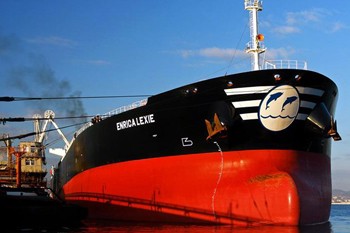
Meanwhile, the ship they were working on, the Enrica Lexie, has been barred from leaving the coast.

Latore Massimiliano and Salvatore Girone were first detained Feb. 19 and have been held since March 5 in a special cell at the Central Prison in Thiruvanantapuram, separate from the general prison population.

Italy wanted them kept in a guest house, according to privileges granted in Italy to military personnel. But Kerala's Chief Minister Oommen Chandy said the Italians would be shown no leniency.

Several countries, including India, allow ship owners to use armed security guards to protect against pirate attacks, now a major threat to merchant ships in the Indian Ocean and Arabian Sea.

Italy says having military personnel aboard the cargo ship is governed by an Italian law conforming to U.N. anti-piracy resolutions, and that such personnel are part of the Italian state and therefore immune to the jurisdiction of foreign states.

A high-level Italian diplomatic mission was unable last month to persuade the Indians to relinquish custody. Italy has since engaged the European Union to lobby its case with New Delhi.


Piracy A Major Drain for World Economy